
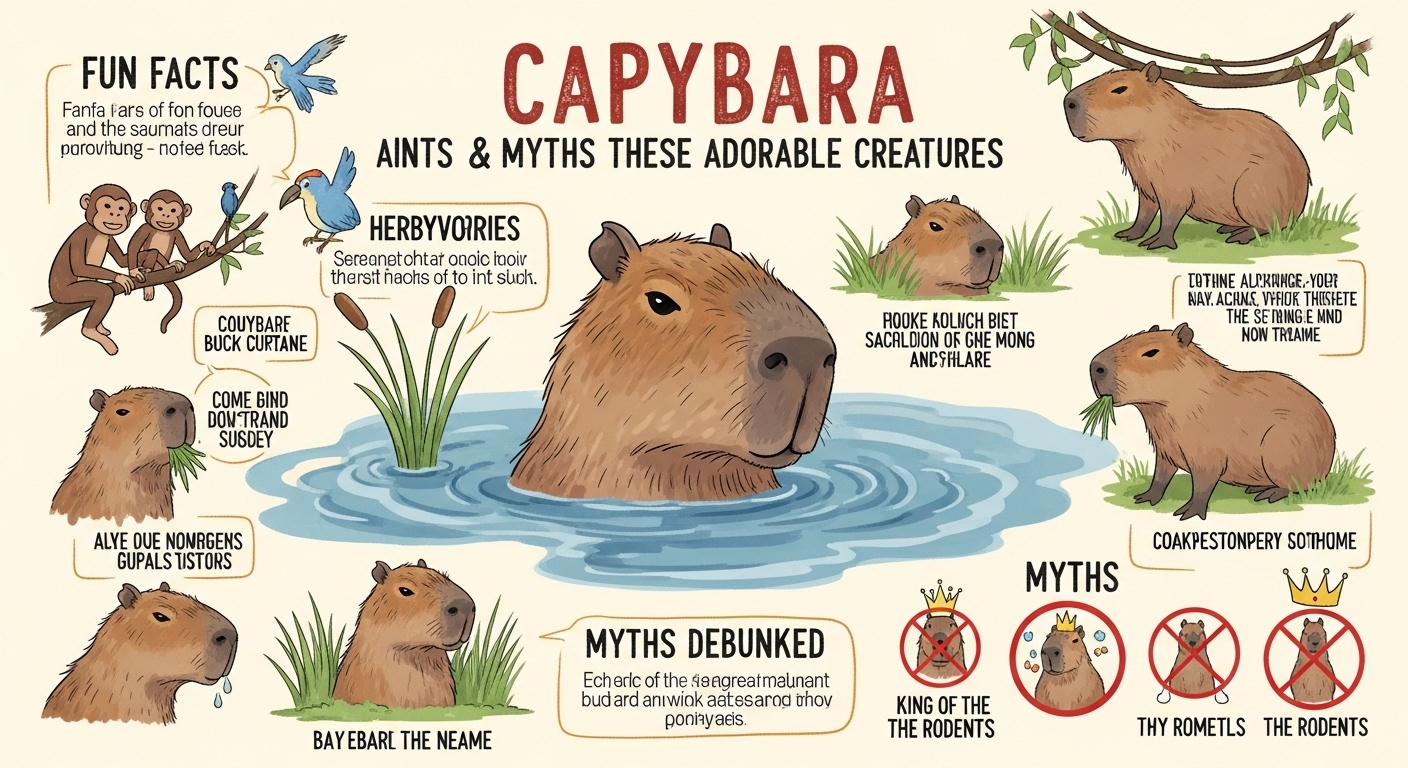
Capybara are the gentle giants of the rodent world, captivating animal lovers everywhere with their adorable looks and friendly demeanor. These fascinating creatures hail from South America, where they roam in groups near bodies of water. With their barrel-shaped bodies and expressive faces, it’s hard not to fall for these charming animals.
But there’s more to capybaras than just their cuteness! As you dive deeper into the world of these remarkable rodents, you’ll discover intriguing facts about their behavior, diet, and social structures. Plus, there are a few myths that need debunking along the way. Whether you’re curious about keeping one as a pet or simply want to learn more about them, this article will take you on an engaging journey through all things capybara. So grab your favorite snack—and get ready for some delightful insights!
Physical Characteristics and Habitat
Capybara are the largest rodents in the world. They can weigh between 77 to 150 pounds and reach about four feet in length. Their bodies are robust, with short legs and a slightly elongated head. Capybaras boast webbed feet, which make them excellent swimmers.
These creatures have a unique coat of coarse fur that helps keep them warm when submerged in water. Their coloration ranges from reddish-brown to grayish-brown, allowing for effective camouflage among their natural habitats.
Capybaras thrive near bodies of water such as rivers, lakes, and wetlands across South America. They prefer areas with dense vegetation where they can graze on grasses and aquatic plants. These environments not only provide food but also shelter from predators like jaguars and caimans. By residing close to water sources, capybaras stay hydrated while effortlessly navigating their watery domain.
Diet and Behavior
Capybaras are herbivores, primarily grazing on grasses and aquatic plants. Their diet also includes fruits and vegetables when available. This preference for plant material provides them with the fiber required for proper digestion.
These creatures have a unique behavior pattern. They are often seen lounging by water bodies, where they feel safest. Capybaras enjoy soaking in the sun or taking refreshing dips to cool off.
Socially, they exhibit intriguing habits. When feeding, capybaras will often graze together in groups, promoting harmony within their community. They communicate through a range of sounds including barks and purrs.
Their natural curiosity drives them to explore their surroundings frequently. While typically calm, capybaras can display playful antics when interacting with one another or even other species, showcasing their friendly nature.
Social Life and Reproduction
Capybaras are known for their strong social structures. They typically live in groups ranging from 10 to 20 individuals, although larger gatherings can occur during the wet season. This cooperative lifestyle helps them stay safe from predators and fosters a sense of community among members.
In terms of reproduction, capybaras are highly adaptive. Females usually give birth to litters of four to five pups after a gestation period of about five months. Interestingly, these young ones are precocial, meaning they can walk and swim shortly after birth.
Social bonding is vital during this time. Mothers often nurse their pups while the rest of the group keeps watch for threats. Capybaras communicate through various vocalizations that strengthen group cohesion and alert others when danger arises. Their complex social life reflects both cooperation and communication within these charming creatures.
Common Myths About Capybaras
Capybaras are often misunderstood, leading to a variety of myths surrounding these charming creatures. One common misconception is that they are just oversized rodents. While true they belong to the rodent family, capybaras hold the title for the largest living rodent in the world.
Another prevalent myth is that capybaras make great pets. Though their friendly and social nature seems appealing, they require extensive space and specific environmental conditions not suitable for most households.
People also believe Capybara can swim proficiently from birth. While they do have an innate ability to float and dive, young capybaras must learn proper swimming techniques from their mothers over time.
Many assume these animals live solitary lives; however, capybaras are highly social and thrive in groups. They form strong bonds within their communities, showcasing behaviors that highlight their complex social structures.
Fun Facts You May Not Know About Capybaras
Capybaras are known as the world’s largest rodents, but did you know they can weigh up to 150 pounds? These gentle giants can stand nearly two feet tall at the shoulders.
They’re semi-aquatic animals and love the water! Capybaras can hold their breath for up to five minutes while swimming. Their webbed feet help them glide effortlessly through rivers and lakes.
A fascinating trait of capybaras is their social nature. They live in groups of 10 to 20 individuals, often forming strong bonds within their family units. Communication among them includes a range of sounds like barks, whistles, and purrs.
These creatures have an interesting grooming ritual too! They spend time cleaning each other’s fur, which helps strengthen social ties and keeps their coats healthy. Plus, they even enjoy munching on grass right after it has been digested by other animals—this phenomenon is called coprophagy!
Why Capybaras Make Great Pets Not
Capybaras are undeniably cute, but they aren’t the perfect pets for everyone. While their gentle demeanor can be appealing, these social animals require a lot of space and companionship.
They thrive in groups and have complex social needs. Keeping just one capybara may lead to loneliness and stress for the animal. A dedicated owner must be prepared to provide both physical space and emotional enrichment.
Their diet consists mainly of grasses, which means regular access to fresh vegetation is essential. This can be challenging for many pet owners who live in urban settings.
Additionally, capybaras need specific care that goes beyond standard pet requirements. They also cannot legally be kept as pets in some regions without special permits or licenses.
Understanding their unique needs is crucial before deciding if a capybara is right for you.
Appreciating These Fascinating Animals
Capybaras are more than just cute faces. They play a vital role in their ecosystems, often found near bodies of water in South America. Their presence helps maintain the balance of aquatic habitats.
These social animals have an undeniable charm. Watching them interact with each other is like witnessing a heartwarming community gathering. Their gentle demeanor makes them quite endearing to observe.
People often appreciate Capybara for their unique adaptations, such as webbed feet that allow them to be excellent swimmers. These traits enable them to evade predators and thrive in the wild.
Moreover, their calm nature has captured the hearts of many animal lovers worldwide. Whether lounging by a riverbank or munching on grass, they exude tranquility that resonates with those who encounter them.
Every interaction with capybaras reminds us of the beauty and complexity of wildlife, encouraging deeper respect for all living creatures around us.
Conclusion
Capybaras are truly remarkable creatures. Their gentle nature and social behavior make them unique among rodents. While they can certainly capture the heart of anyone who encounters them, it’s important to understand their needs and lifestyle.
These animals thrive in environments that mimic their natural habitat. They require space, water, and companionship. For those thinking about having a capybara as a pet, it’s vital to consider whether you can provide for these requirements effectively.
As fascinating as they are cute, capybaras play an essential role in their ecosystem too. By appreciating these animals for both their charm and ecological significance, we gain insight into the delicate balance of wildlife conservation.
Whether you’re drawn to them for their endearing qualities or simply curious about their existence in the animal kingdom, capybaras offer endless opportunities for wonder and learning.