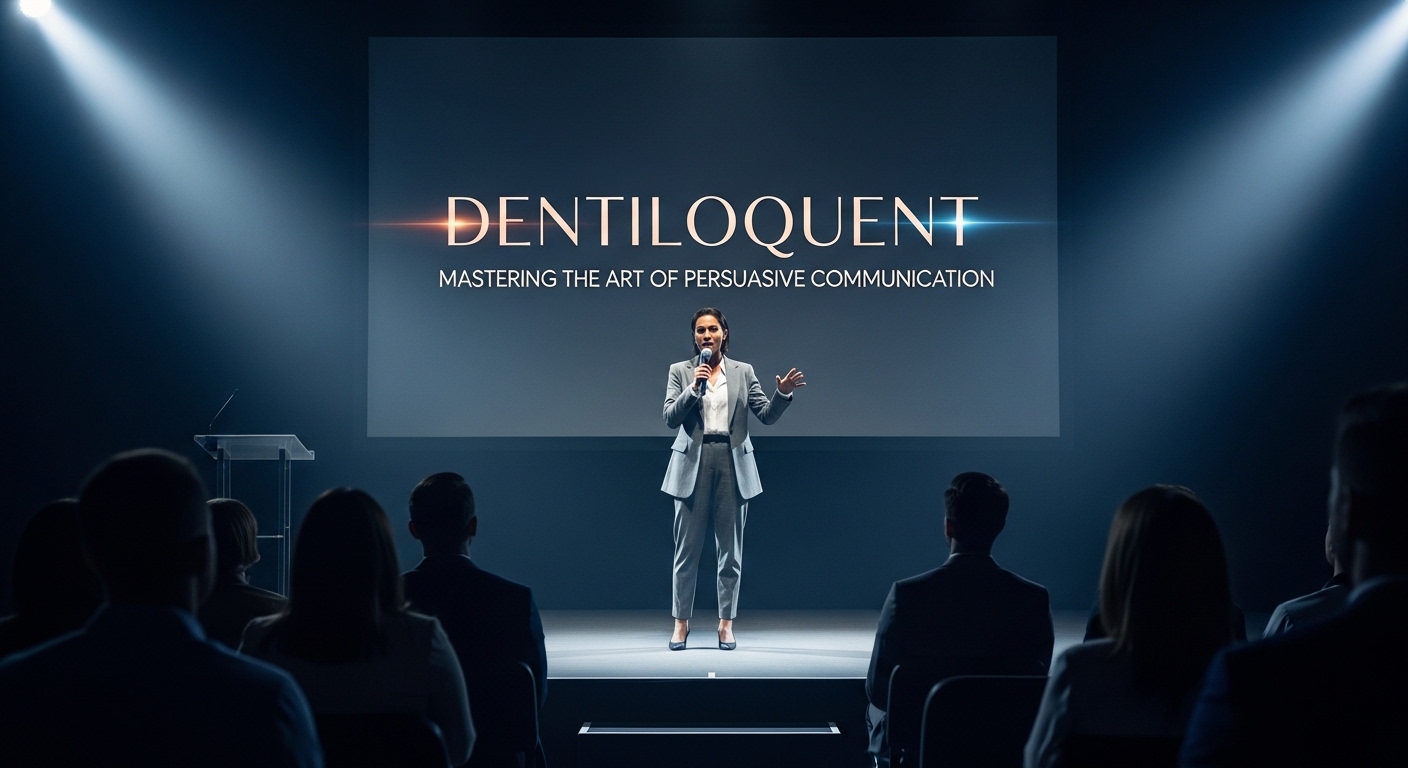
It was a brisk Tuesday morning when Maya, a young entrepreneur, stepped onto the stage at a local startup pitch event. She wasn’t the tallest or the flashiest, but within minutes, every investor leaned forward, hanging onto her words. How did she do it? Maya’s secret was being dentiloquent—possessing a rare ability to wield language with precision and power, turning mere speech into a tool for influence.
In today’s hyper-connected world, technical skills alone rarely define success. Those who are dentiloquent, capable of persuading and inspiring with their words, often achieve breakthroughs where others falter. From boardrooms to social media, the power of articulate communication is undeniable.
What Does It Mean to Be Dentiloquent?
Being dentiloquent goes beyond eloquence. It is the art of structuring words to resonate deeply with an audience, creating clarity, persuasion, and impact. Unlike ordinary speaking skills, dentiloquence combines emotional intelligence with linguistic precision, allowing someone to:
-
Inspire trust and credibility
-
Present complex ideas clearly
-
Influence decisions without coercion
Experts in leadership and communication note that dentiloquence is often the difference between a good idea and a widely adopted innovation. It is not just what you say, but how you convey it.
The Science Behind Dentiloquence
Research in cognitive psychology shows that human brains respond not just to content but to delivery. The dentiloquent speaker engages multiple brain regions, triggering attention, emotional connection, and memory retention.
| Communication Element | Dentiloquent Effect | Practical Example |
|---|---|---|
| Tone | Captures attention | Modulating pitch in presentations keeps listeners engaged |
| Word Choice | Evokes emotion | Using descriptive language to paint a vision of success |
| Timing & Pause | Reinforces impact | Pausing after key statements allows ideas to resonate |
| Storytelling | Enhances memory | Framing a business pitch as a personal journey improves recall |
This table illustrates that dentiloquence is not accidental; it is a deliberate craft, combining strategy, psychology, and artistry.
Dentiloquence in the Business World
The boardroom, pitch event, or negotiation table often separates the winners from the rest by communication skill. A dentiloquent leader can articulate vision in a way that energizes teams, persuades investors, and fosters collaboration.
Consider global CEOs: those who are highly dentiloquent often inspire loyalty and creativity. They know when to simplify jargon, when to appeal to emotion, and how to anchor key points in memorable narratives. It is this skill that transforms a company mission statement from words on a page to a rallying cry that employees and customers can connect with.
Dentiloquent Habits to Cultivate
Becoming dentiloquent is less about innate talent and more about intentional practice. Here are essential habits:
-
Active Listening – Understanding your audience’s values and concerns allows you to tailor your words effectively.
-
Clarity over Complexity – Simple, precise language often has a stronger impact than verbose statements.
-
Story Integration – Humans are wired to remember stories; framing points within narratives increases retention.
-
Feedback Loops – Practicing speeches, presentations, or casual conversations and refining based on response builds dentiloquence.
Over time, these habits coalesce into a natural ability to speak with confidence, authority, and emotional resonance.
The Role of Digital Communication
Dentiloquence is not limited to face-to-face encounters. In an era dominated by email, social media, and video conferencing, being able to convey influence through written and digital channels is increasingly vital.
-
Email campaigns benefit from precise, persuasive phrasing that encourages action.
-
Social media messaging can mobilize communities when crafted with clarity and emotional appeal.
-
Virtual presentations require vocal modulation and pacing to maintain engagement without physical presence.
Professionals who are dentiloquent online often enjoy higher engagement, stronger personal branding, and more meaningful professional connections.
Real-Life Success Stories
Consider Maya, the entrepreneur from our opening story. Her dentiloquence allowed her to secure a crucial investment and rally a talented team around her vision. Similarly, leaders like Sheryl Sandberg and Simon Sinek demonstrate dentiloquence in their ability to articulate complex ideas in ways that inspire teams and audiences globally.
Being dentiloquent isn’t a gimmick—it’s a career-defining skill that merges strategic thinking with emotional intelligence.
Cultivating Dentiloquence: A Lifelong Skill
The journey to becoming dentiloquent is ongoing. It requires curiosity, practice, and a willingness to adapt. Reading diverse materials, engaging in debates, and observing skilled communicators are all effective ways to refine this skill. The rewards are profound: improved professional influence, deeper personal relationships, and an elevated presence in every conversation.
In essence, dentiloquence is more than speaking well—it is the ability to make words work for you, shaping perception, inspiring action, and creating meaningful impact.
Conclusion
In a world saturated with information, the ability to communicate with clarity and impact sets individuals apart. Dentiloquent individuals don’t just speak—they influence, inspire, and lead. Whether in business, education, or personal life, cultivating dentiloquence equips you with a lifelong advantage. Like Maya on the stage, your words can become your most powerful tool for change.