In a quiet operating room, long after the diagnosis is made and the incision carefully planned, there comes a moment that rarely gets the spotlight. The surgeon pauses, selects a thread no thicker than a strand of hair, and begins to close what was opened to heal. This final act—suturing—often determines how well a wound recovers, how a scar forms, and how confidently a patient returns to daily life. At the heart of this moment lies a surprisingly complex world: nahttypen, the different types of sutures that quietly shape outcomes across modern medicine.
Although sutures may seem like a purely clinical detail, they represent a careful balance of science, material engineering, and experience. Understanding nahttypen is not only important for clinicians but also for innovators, founders, and tech-minded readers interested in how small design decisions can have lasting human impact.
Why Nahttypen Matter More Than Most People Realize
Sutures are not interchangeable threads. Each wound has its own demands, influenced by tissue type, tension, healing speed, infection risk, and even patient lifestyle. Choosing the wrong nahttypen can slow healing, increase scarring, or raise the risk of complications. Choosing the right one can mean faster recovery, fewer follow-ups, and better long-term results.
From a broader perspective, nahttypen reflect how medicine has evolved toward precision. Just as personalized medicine tailors drugs to patients, modern suturing tailors materials and techniques to tissue behavior. This mindset mirrors trends seen in technology and product design: small optimizations at critical moments can dramatically improve user—or patient—experience.
Absorbable Nahttypen and the Logic of Disappearing Support
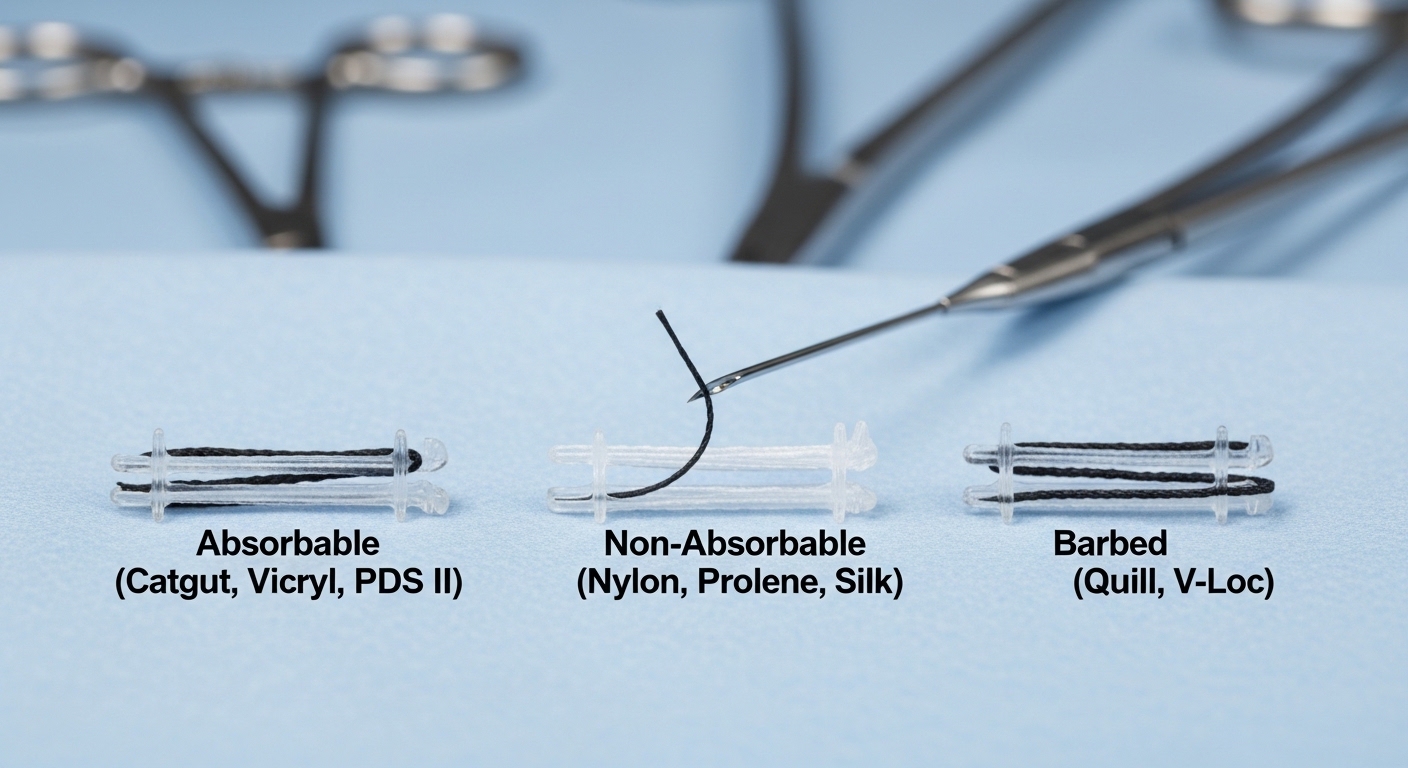
One of the most widely used categories of nahttypen is absorbable sutures. These are designed to provide temporary support while the body heals itself. Over time, they break down naturally and are absorbed, removing the need for manual removal.
Absorbable nahttypen are commonly used for internal tissues such as muscles, connective tissue, and certain layers beneath the skin. Their greatest advantage lies in convenience and reduced patient stress. No follow-up visit is required to remove them, and the risk of long-term foreign material remaining in the body is minimized.
However, these nahttypen must be carefully matched to the healing speed of the tissue. If they dissolve too quickly, the wound may reopen. If they last too long, they can trigger inflammation. The art lies in timing—supporting the tissue just long enough, then stepping aside.
Non-Absorbable Nahttypen and Long-Term Stability
In contrast, non-absorbable nahttypen are designed for durability. Made to resist breakdown, they are often used where long-term support is critical, such as in skin closures under high tension, cardiovascular procedures, or orthopedic repairs.
These sutures may remain in the body permanently or be removed once healing is sufficient. Their strength and reliability make them indispensable, but they also require more deliberate planning. Visible sutures can affect cosmetic outcomes, and permanent materials must be biocompatible to avoid chronic irritation.
From a systems-thinking perspective, non-absorbable nahttypen resemble long-term infrastructure investments: higher commitment upfront, but unmatched stability when done right.
Monofilament Versus Multifilament: Structure Shapes Behavior
Beyond absorbability, nahttypen are also classified by structure. Monofilament sutures consist of a single smooth strand. Their design allows them to glide easily through tissue, reducing trauma and lowering the risk of bacteria becoming trapped along the surface.
Multifilament sutures, on the other hand, are braided or twisted from multiple strands. This structure improves flexibility and knot security, making them easier to handle during complex procedures. The trade-off is a slightly higher risk of infection, as bacteria can hide within the braided fibers.
The choice between these nahttypen often reflects the surgeon’s priorities: ease of handling versus minimizing infection risk. It is a reminder that even in highly technical fields, ergonomics and human factors play a decisive role.
A Practical Overview of Common Nahttypen
To better understand how these differences play out in real settings, the table below summarizes widely used nahttypen and their typical applications.
| Nahttypen Category | Structural Type | Absorbability | Common Use Cases |
|---|---|---|---|
| Absorbable, Monofilament | Single strand | Yes | Internal soft tissues, fast-healing areas |
| Absorbable, Multifilament | Braided | Yes | Deep tissue layers needing flexibility |
| Non-Absorbable, Monofilament | Single strand | No | Skin closure, vascular procedures |
| Non-Absorbable, Multifilament | Braided | No | Orthopedic and high-tension repairs |
This simplified overview highlights an important point: nahttypen are chosen through layered decisions, not isolated features. Material, structure, and clinical context must align.
Suturing Techniques as an Extension of Nahttypen
While materials matter, nahttypen cannot be separated from technique. Continuous sutures distribute tension evenly along a wound, while interrupted sutures allow precise adjustment at each point. Mattress sutures provide extra strength in areas under stress, and subcuticular sutures focus on cosmetic outcomes.
Each technique interacts differently with various nahttypen. A monofilament suture may perform beautifully in a continuous pattern but be less forgiving in complex knotting. A braided suture may excel in interrupted stitches but require stricter infection control.
In this way, nahttypen act like tools in a toolkit. Their effectiveness depends not only on their design but on how skillfully they are used.
Innovation and the Future of Nahttypen
The world of nahttypen is far from static. Research continues into antimicrobial coatings, bioactive sutures that promote healing, and smart materials capable of responding to changes in tissue tension or infection markers.
These innovations echo developments seen in wearable tech and responsive materials. The idea is no longer just to close a wound, but to actively support healing, monitor progress, and reduce complications. For entrepreneurs and tech readers, this space offers a compelling example of how traditional fields can be transformed through interdisciplinary thinking.
Human Outcomes Beyond the Operating Room
Ultimately, nahttypen influence more than surgical success rates. They shape patient comfort, recovery timelines, and even emotional well-being. A well-chosen suture can mean less pain, a cleaner scar, and faster return to work or family life.
This human dimension is often overlooked in technical discussions, yet it is where nahttypen have their greatest impact. Behind every stitch is a person waiting to heal, and behind every material choice is a decision that carries real consequences.
Conclusion
Nahttypen may appear to be a minor detail in the vast landscape of healthcare, but they embody the precision and care that modern medicine strives for. From absorbable sutures that quietly disappear to durable threads that provide lasting support, each type plays a specific role in the healing journey.
As medicine continues to evolve, nahttypen will remain a powerful reminder that progress is often built from small, thoughtful choices. In the end, it is these nearly invisible threads that help hold both bodies and trust together.