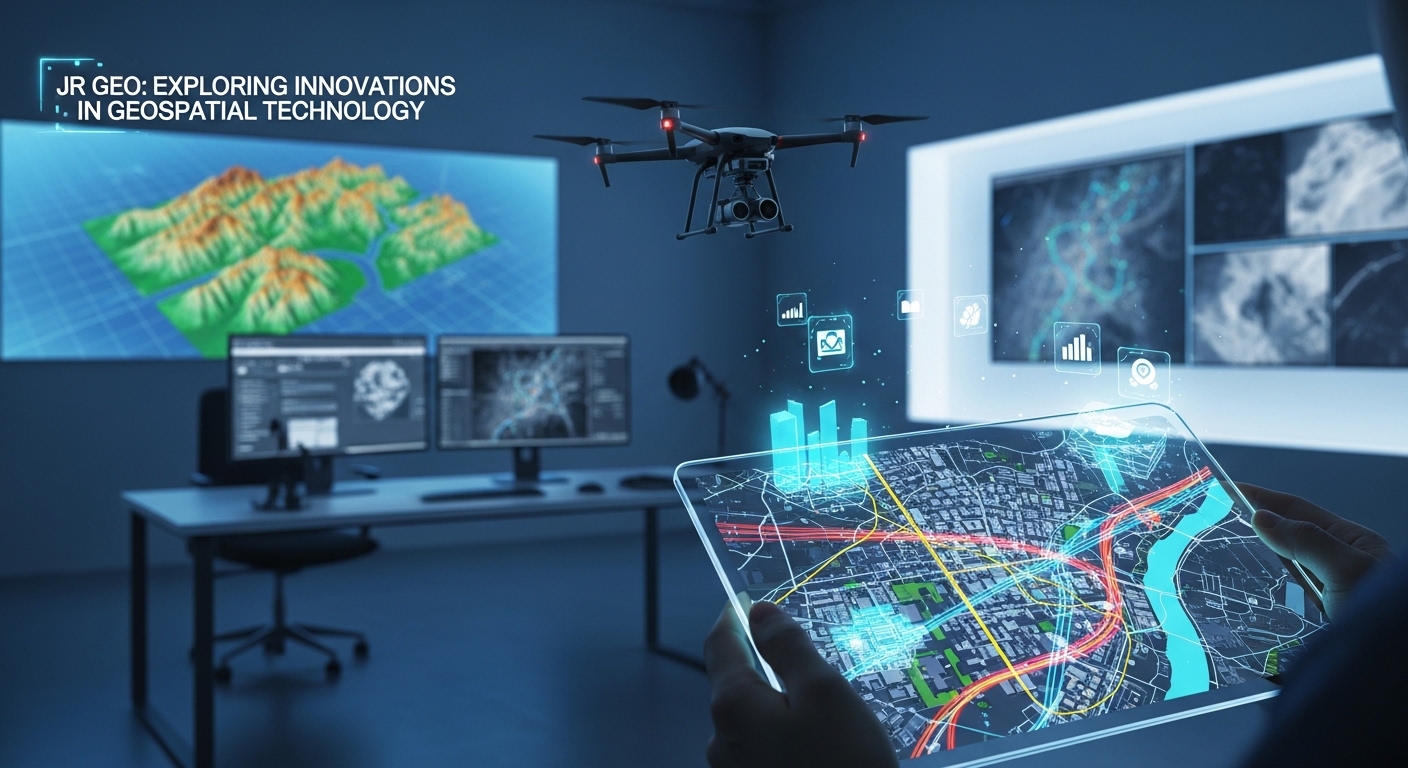
In today’s data-driven world, understanding our environment has never been more critical. JR Geo has emerged as a pioneer in geospatial technology, offering tools and solutions that help businesses, governments, and researchers analyze, visualize, and interpret spatial data efficiently. From urban planning to environmental monitoring, JR Geo empowers organizations to make smarter decisions using precise geospatial insights.
The need for accurate location-based data has grown exponentially, driven by industries such as logistics, agriculture, disaster management, and infrastructure development. With a combination of advanced analytics, satellite imagery, and mapping technology, JR Geo provides a robust framework for tackling complex geographic challenges.
The Core Technologies Behind JR Geo
At the heart of JR Geo are several innovative technologies that set it apart in the geospatial landscape. These include Geographic Information Systems (GIS), remote sensing, and location intelligence platforms. GIS enables the storage, analysis, and visualization of spatial data, allowing organizations to uncover patterns and relationships that traditional methods might overlook.
Remote sensing, including satellite and drone imagery, enhances the ability to collect real-time data over vast areas. Combined with advanced data analytics, these tools enable predictive modeling and scenario planning.
| Technology | Description | Application |
|---|---|---|
| GIS | System for capturing, storing, and analyzing spatial data | Urban planning, logistics |
| Remote Sensing | Acquisition of information from satellites and drones | Environmental monitoring, disaster response |
| Location Intelligence | Analysis of geographic data to make informed business decisions | Retail site selection, transportation |
| Data Visualization | Transforming complex data into interactive maps and dashboards | Decision-making, reporting |
The integration of these technologies ensures that JR Geo delivers accurate, actionable insights across multiple sectors.
Applications of JR Geo in Urban Development
Urban areas are complex ecosystems that require careful planning and management. JR Geo provides municipalities with precise spatial data to optimize city layouts, transportation networks, and public services. By analyzing population density, land use, and infrastructure, urban planners can make informed decisions about where to invest resources and how to manage growth sustainably.
For example, traffic congestion analysis using JR Geo’s GIS tools can identify bottleneck areas and propose optimal routes or public transportation enhancements. Similarly, zoning decisions benefit from accurate land-use mapping, which reduces conflicts between residential, commercial, and industrial areas.
| Urban Challenge | JR Geo Solution | Impact |
|---|---|---|
| Traffic congestion | GIS-based route optimization | Reduced travel time, lower emissions |
| Land-use conflicts | Detailed mapping and analysis | Efficient zoning and development |
| Infrastructure planning | Spatial modeling for utilities and roads | Cost savings and improved efficiency |
By leveraging geospatial intelligence, cities can create more livable, resilient, and sustainable urban environments.
JR Geo in Environmental Monitoring
Environmental conservation and sustainability are at the forefront of global priorities. JR Geo provides tools that enable environmental scientists and policymakers to monitor ecosystems, track deforestation, and analyze climate patterns. Satellite imagery combined with GIS allows for real-time observation of changes in land cover, water bodies, and vegetation health.
For instance, monitoring forest degradation through JR Geo’s mapping tools can help governments enforce regulations and design conservation programs. Similarly, water quality analysis in rivers and lakes benefits from geospatial data that detects pollution sources and predicts contamination risks.
| Environmental Concern | JR Geo Tool Used | Outcome |
|---|---|---|
| Deforestation | Satellite imagery + GIS | Early detection and prevention strategies |
| Water pollution | Geospatial monitoring systems | Identifying pollutant sources |
| Climate change impact | Predictive modeling with GIS | Planning adaptive strategies |
By providing accurate environmental insights, JR Geo helps stakeholders make evidence-based decisions for a sustainable future.
JR Geo in Disaster Management
Natural disasters such as floods, earthquakes, and hurricanes demand swift and informed responses. JR Geo equips emergency responders with critical geospatial information to enhance preparedness, response, and recovery. GIS-based hazard mapping allows authorities to identify vulnerable regions, simulate disaster scenarios, and allocate resources efficiently.
During an emergency, real-time data from drones or satellites can help track affected areas, optimize evacuation routes, and coordinate relief operations. JR Geo’s predictive analytics also support long-term planning to minimize future risks.
| Disaster Type | JR Geo Application | Benefit |
|---|---|---|
| Flood | GIS-based flood mapping | Evacuation planning and risk reduction |
| Earthquake | Seismic hazard modeling | Infrastructure reinforcement |
| Wildfire | Real-time monitoring via satellites | Rapid response and containment |
Through the integration of geospatial technologies, JR Geo significantly improves disaster resilience and safety.
JR Geo in Agriculture and Land Management
Precision agriculture is revolutionizing the way crops are managed and harvested. JR Geo allows farmers to optimize crop yields, manage irrigation efficiently, and reduce environmental impact through accurate spatial data. By mapping soil types, moisture levels, and crop health, JR Geo tools enable precision farming practices that save time, resources, and costs.
Moreover, land management agencies use JR Geo to monitor land tenure, track property boundaries, and assess suitability for various land-use projects. This ensures that resources are allocated efficiently and disputes are minimized.
| Agricultural Focus | JR Geo Application | Outcome |
|---|---|---|
| Crop monitoring | Satellite imagery + GIS | Optimized yield and reduced waste |
| Irrigation management | Soil moisture mapping | Efficient water usage |
| Land assessment | GIS-based suitability analysis | Informed decision-making for land use |
JR Geo’s capabilities empower the agriculture sector to embrace sustainable, technology-driven solutions.
The Future of JR Geo
As technology advances, JR Geo is poised to integrate artificial intelligence, machine learning, and real-time IoT data into geospatial platforms. This will enhance predictive analytics, automate mapping processes, and enable smarter decision-making across industries.
Future applications may include autonomous transportation planning, smart city development, and real-time environmental monitoring with AI-powered insights. By staying at the forefront of innovation, JR Geo ensures that geospatial technology remains an essential tool for solving global challenges.
| Emerging Technology | Potential JR Geo Application | Expected Impact |
|---|---|---|
| Artificial Intelligence | Predictive analytics for urban planning | Faster, data-driven decisions |
| Machine Learning | Automated land classification | Increased accuracy in mapping |
| IoT Integration | Real-time environmental monitoring | Immediate response to ecological threats |
The convergence of these technologies promises a future where geospatial intelligence is seamlessly integrated into daily decision-making.
Conclusion
JR Geo represents a transformative force in the world of geospatial technology. From urban development and environmental conservation to disaster management and precision agriculture, its applications are vast and impactful. By harnessing advanced GIS tools, remote sensing, and predictive analytics, JR Geo empowers organizations to make informed, strategic decisions.
As we continue to navigate complex global challenges, JR Geo stands at the forefront, providing insights that shape smarter, more sustainable, and resilient societies. Its innovations demonstrate how geospatial technology can bridge the gap between data and action, making the world a more connected and informed place.